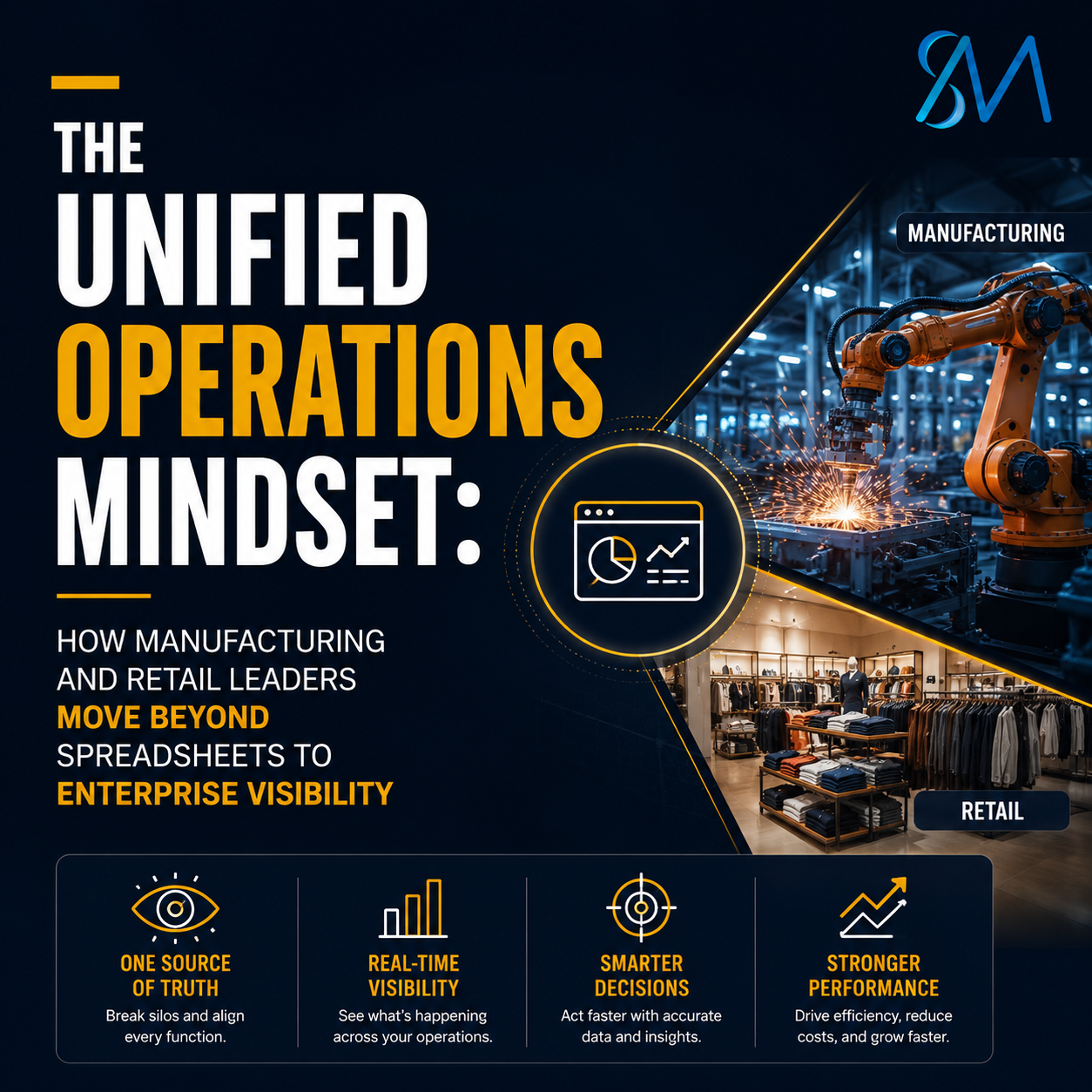
The Spreadsheet That Built Itself a Team
The inventory spreadsheet that a retail operations manager built in 2019 was never supposed to become a permanent fixture of the business. It was a pragmatic solution to a specific problem: the ERP did not communicate with the CRM, the CRM did not reflect what the warehouse actually held, and leadership needed a consolidated picture of operational reality before the Monday planning meeting. The spreadsheet solved it. One person, two hours, every Sunday evening. Within six months, the spreadsheet had columns contributed by four departments. Within a year, it had a designated owner, a formal update schedule, and a succession plan for when the person who understood its logic left the team. The spreadsheet had become a system. And the system had become the single most trusted source of operational truth in a business that had invested significantly in enterprise platforms that were supposed to eliminate exactly this kind of workaround. This pattern — the informal data bridge that quietly becomes an operational dependency — is the most consistent finding SuperBotics encounters when beginning an enterprise integration engagement with manufacturing and retail clients. The platforms work. The integrations between them do not. And the gap is filled by people, processes, and spreadsheets that become embedded in the operational rhythm so deeply that removing them feels more risky than maintaining them.
The real cost of this architecture is not the hours spent maintaining the spreadsheet. It is the quality of every decision made from it. When production data from the ERP and sales data from the CRM arrive at the Monday meeting in a manually reconciled spreadsheet that reflects the state of the business as of Sunday evening, leadership is making forward-looking decisions on backward-looking data. For manufacturing and retail organizations where inventory positioning, production scheduling, and distribution commitments need to reflect today’s demand signals rather than last week’s, that lag is commercially consequential. SuperBotics has consistently found that clients who replace manual reconciliation processes with integrated operational architectures do not simply recover the hours spent on reconciliation — they recover the decision quality that those hours were masking. The retail client managing nine distribution points across Europe whose Monday reconciliation SuperBotics eliminated did not simply get six hours back. Their leadership team started making Monday decisions from Monday data for the first time in four years.
Why Manufacturing and Retail Data Fragmentation Is Structurally Different
Manufacturing and retail organizations face a specific version of the data fragmentation problem that reflects the complexity of their operational structure. Production data lives in the ERP or MES. Sales and customer data lives in the CRM. Inventory data lives in the WMS. Financial data lives in the accounting system. In a well-integrated architecture, these four sources speak to each other continuously and produce a unified operational view that allows leadership to see the relationship between production output, inventory position, sales velocity, and margin in real time. In the architecture most manufacturing and retail organizations actually have, these four sources speak to each other through APIs that were configured at implementation, point-to-point connections that break when either system is updated, manual exports that someone processes on a schedule, or the spreadsheet. The fragmentation is not the result of poor platform choices. It is the result of implementation strategies that optimized each system independently rather than designing the integrated architecture first and selecting and configuring the platforms to serve it.
The gap is rarely where it first appears. Most operations leaders who take the ERP Fit Quiz find the real friction point is one layer deeper than where they have been looking.
→ See Where Your Operations Actually Stand — 2 Minutes→ Speak with Our Team
SuperBotics approaches manufacturing and retail integration with a specific understanding of the data flows that are most commercially critical in these sectors. The relationship between inventory position and sales commitment — knowing in real time whether the inventory exists to support the sales order that was just placed — is the single most valuable integration in retail. The relationship between production capacity and order demand — knowing whether the scheduled production run can satisfy the confirmed order book without expediting — is the equivalent in manufacturing. SuperBotics begins every engagement by identifying these high-value data relationships, building the integration architecture around them first, and then extending the unified data layer to cover the full operational picture. The 98 percent on-time delivery rate SuperBotics maintains across 150 plus enterprise launches reflects the discipline of building to the right priority sequence rather than building everything at once and discovering integration failures during go-live.
The SuperBotics Delivery Model for Manufacturing and Retail Integration
SuperBotics delivers manufacturing and retail integration engagements through cross-functional pods that combine integration engineering, operational domain expertise, and change management capability. The pod is onboarded and delivering within ten business days, drawing on 120 plus specialists with an average of seven years of enterprise experience. The engagement model follows a structured sequence: operational discovery to map data flows and decision dependencies, integration architecture design built around the high-value data relationships identified in discovery, parallel validation to ensure operational continuity throughout the transition, and post-go-live governance to maintain data quality as the business evolves. Every milestone is tied to a business outcome rather than a technical completion — the engagement is not complete when the integration is live, it is complete when the operations team has confirmed that the decisions they previously made with manual preparation can now be made with greater speed and greater accuracy from the integrated layer.
The platforms SuperBotics integrates for manufacturing and retail clients include SAP, Oracle, Microsoft Dynamics, Odoo, and custom ERP environments on the operational side; Salesforce, Zoho, HubSpot, and custom CRM platforms on the commercial side; and major WMS platforms, BI tools, and custom operational dashboards across the full data architecture. SuperBotics has delivered these integrations across AWS, Azure, and GCP cloud environments, and across on-premise, cloud, and hybrid infrastructure configurations. The 38 percent average cost optimization achieved by SuperBotics Managed Teams clients in manufacturing and retail reflects the compounding impact of eliminating the manual reconciliation processes, the data quality errors, and the decision latency that characterize the fragmented architecture — not through a single integration project but through the sustained operational discipline of a delivery partnership that averages 6.8 years in duration.
What Changes When the Architecture Is Right
The manufacturing and retail organizations that operate with a unified data architecture share a set of operational characteristics that distinguish them from organizations still managing fragmented systems. Planning meetings open with the data rather than spending the first thirty minutes establishing which version of the data to trust. Inventory decisions reflect current stock positions rather than positions from the last manual update. Sales commitments are made with visibility into the production and inventory capacity that supports them. Leadership can see the relationship between operational performance and commercial outcome in real time rather than discovering it three weeks later during the monthly close. These characteristics sound straightforward. In practice, they represent a fundamental change in how the organization relates to its own operational data — from a culture of reconciliation, where the first task in every decision-making conversation is establishing a shared factual baseline, to a culture of command, where the data is trusted, current, and immediately actionable.
SuperBotics delivers this shift through the integration architecture and the governance model that keeps it performing as the business grows. The integration is not a project with an end date. It is an operational asset with a maintenance model, a monitoring layer, and a defined process for extending it as new systems, new data flows, and new decision requirements emerge. This is what the 6.8-year average client tenure reflects — not the length of a project, but the depth of a partnership where SuperBotics remains invested in the operational performance of the integration long after the initial delivery is complete. Manufacturing and retail leaders ready to replace the spreadsheet with a governed, integrated operational architecture can explore what that would look like for their specific environment at superbotics.com.
The clearest starting point we have seen: know what your operations are actually ready for before deciding what to change.
The ERP Fit Quiz surfaces that picture honestly — no interpretation required.
Leave a Reply